Advanced Keyword Mapping Strategies for SEO Websites | Improve Rankings & Traffic
In this article:
Learn advanced keyword mapping strategies to improve SEO rankings, eliminate keyword cannibalization, strengthen content architecture, and drive targeted organic traffic to your website.
Introduction
In today's highly competitive digital landscape, ranking on search engines requires much more than simply targeting high-volume keywords. Modern SEO success depends on understanding user intent, organizing content strategically, and ensuring every page serves a clear purpose within your website's ecosystem. This is where advanced keyword mapping comes into play.
Keyword mapping is the process of assigning specific keywords and search intents to individual pages on your website. When done correctly, it helps search engines understand your content, prevents keyword cannibalization, and creates a seamless user experience. Advanced keyword mapping strategies help businesses improve rankings, drive qualified traffic, and increase conversions by ensuring every page aligns with a specific search objective.
Problem Statement
Many websites struggle with SEO performance despite publishing large amounts of content. Common challenges include:
- Multiple pages competing for the same keywords.
- Important keywords not being targeted effectively.
- Content gaps that prevent websites from capturing valuable search traffic.
- Poor alignment between user intent and page content.
- Difficulty scaling SEO efforts across large websites.
Without a structured keyword mapping strategy, businesses often experience stagnant rankings, lower organic visibility, and reduced return on their content investments. As websites grow, these issues become even more difficult to manage, often resulting in lost ranking opportunities and reduced search visibility.
How We Solve It
A successful keyword mapping strategy goes beyond keyword research. It requires a systematic approach that connects search intent, content architecture, and business goals.
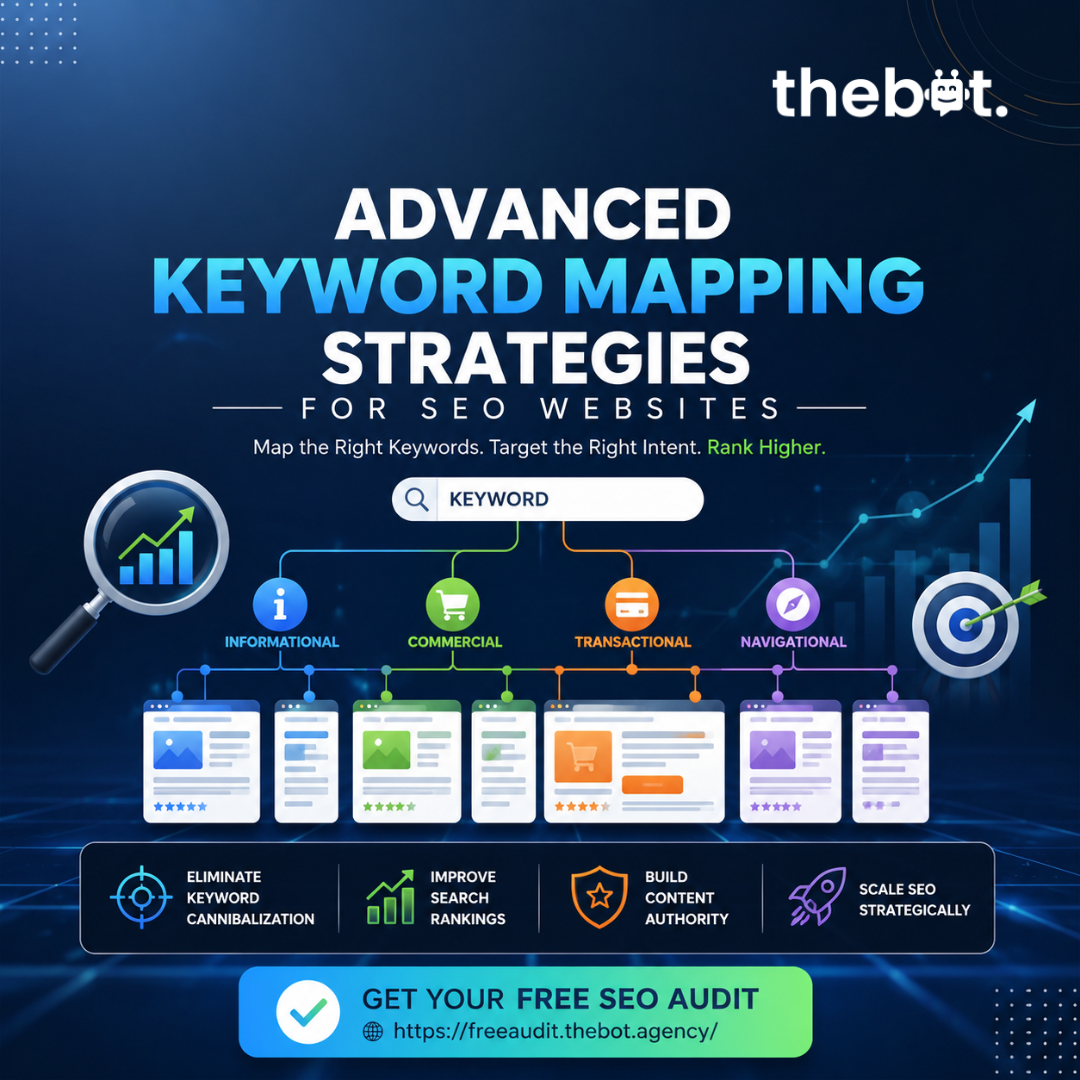
1. Intent-Based Keyword Classification
Keywords are categorized based on user intent:
- Informational
- Commercial
- Transactional
- Navigational
This ensures each page addresses the specific needs of users at different stages of the customer journey.
2. Content Cluster Development
Instead of targeting isolated keywords, content is organized into topic clusters. This strengthens topical authority, improves internal linking, and helps search engines better understand the relationship between pages.
3. Keyword Gap Analysis
Identifying valuable keywords that are currently untapped allows businesses to expand their content strategy and capture additional organic traffic opportunities.
4. Eliminating Keyword Cannibalization
A detailed review of existing content helps identify pages competing for the same keywords. Optimizing, consolidating, or restructuring these pages improves ranking potential and enhances content relevance.
5. Scalable SEO Architecture
A well-designed keyword map supports future content growth while maintaining a logical site structure that benefits both users and search engines.
To identify keyword gaps, technical SEO issues, and opportunities for improvement, businesses can start with a free SEO audit at:
https://freeaudit.thebot.agency/
Case Study
E-commerce Website Growth Through Strategic Keyword Mapping
An e-commerce business was experiencing declining organic traffic despite consistently publishing new content.
Challenges
- More than 150 pages targeting overlapping keywords.
- Product and category pages competing against each other.
- Missing content for high-intent commercial searches.
- Weak internal linking structure.
Solution
A comprehensive keyword mapping project was implemented that included:
- Full keyword inventory and categorization.
- Search intent analysis.
- Consolidation of duplicate and competing pages.
- Creation of targeted landing pages for uncovered keyword opportunities.
- Strategic internal linking improvements.
Results
- Improved rankings across core product categories.
- Increased visibility for high-converting search terms.
- Better crawl efficiency and content discoverability.
- Higher organic traffic quality and conversion rates.
The keyword mapping strategy transformed the website into a more organized, search-friendly platform capable of supporting long-term SEO growth.
Conclusion
Advanced keyword mapping is a foundational element of successful SEO. By aligning keywords with user intent, eliminating content overlap, identifying growth opportunities, and creating a scalable content structure, businesses can significantly improve their search engine performance.
A well-executed keyword mapping strategy not only increases organic visibility but also enhances user experience and supports sustainable growth. Whether managing a small website or a large enterprise platform, investing in advanced keyword mapping can unlock valuable traffic opportunities and improve overall SEO effectiveness.
To discover how your website can improve its keyword targeting, content structure, and search performance, get a free SEO audit today:
Frequently Asked Questions
Keyword mapping is the process of assigning specific target keywords to individual pages on a website. It helps search engines understand content relevance while ensuring pages do not compete against each other for the same search terms.
Keyword mapping improves website structure, prevents keyword cannibalization, enhances user experience, and helps search engines identify the most relevant page for a particular search query, resulting in better rankings.
Keyword cannibalization occurs when multiple pages on a website target the same keyword, causing them to compete against each other in search results and reducing overall ranking potential.
Content clusters group related content around a central topic, helping establish topical authority, improve internal linking, and increase the likelihood of ranking for multiple relevant keywords.
Keyword mapping should be reviewed regularly, especially after publishing new content, redesigning a website, launching new products, or when search trends and user behavior change.