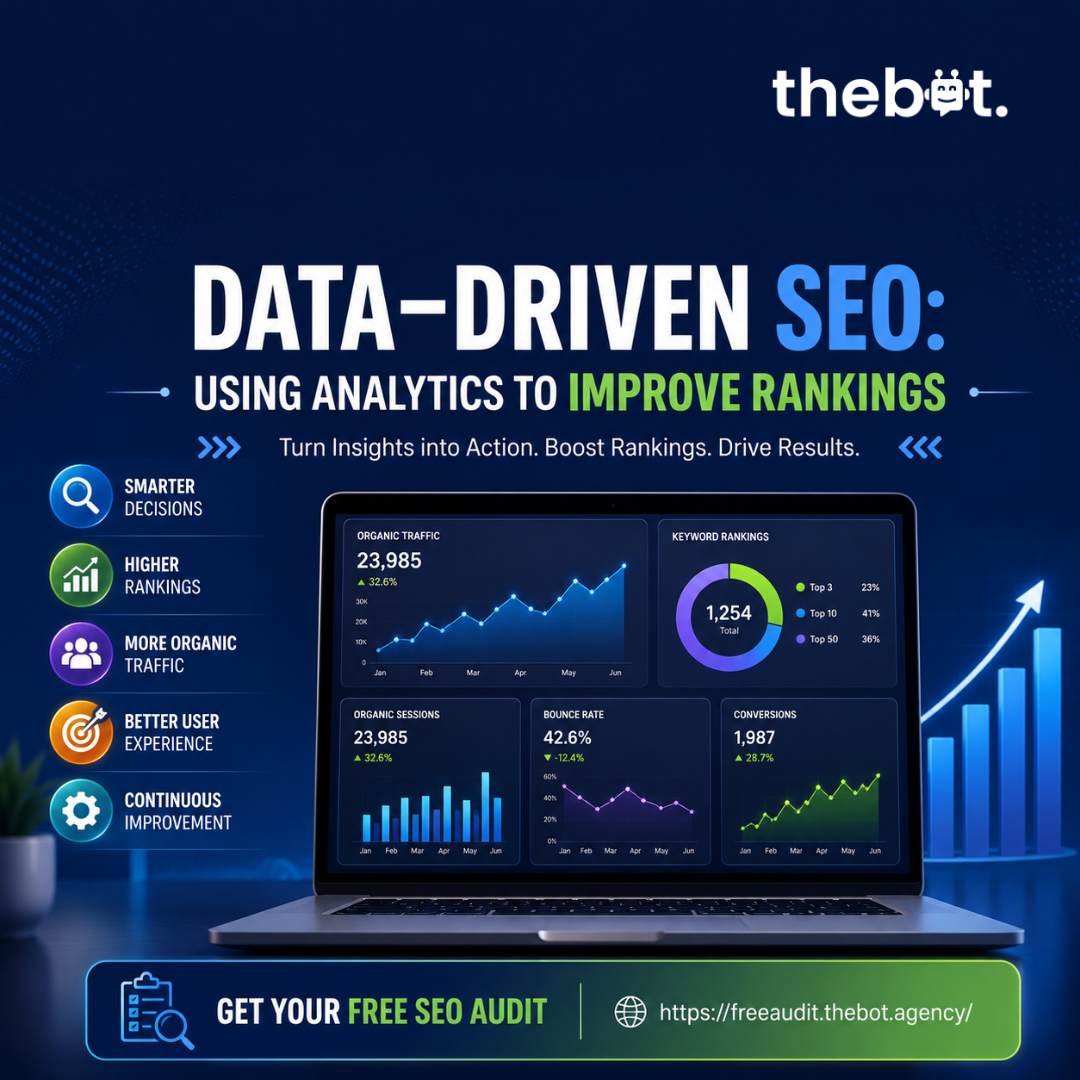
Data-Driven SEO: Using Analytics to Improve Rankings & Organic Traffic
In this article:
Discover how data-driven SEO uses analytics to improve rankings, increase organic traffic, optimize content performance, and drive measurable business growth. Learn key strategies and get a free SEO audit.
Introduction
Search engine optimization has evolved far beyond keyword stuffing and guesswork. In today's competitive digital landscape, businesses that rely on data and analytics consistently outperform those that don't. Data-driven SEO uses measurable insights to understand user behavior, identify opportunities, and make strategic improvements that lead to higher search engine rankings.
By analyzing performance metrics, businesses can uncover what's working, what isn't, and where to focus their efforts for maximum impact. This approach helps create SEO strategies that are more efficient, scalable, and results-oriented.
Problem Statement
Many businesses invest in SEO but struggle to see meaningful improvements in rankings, traffic, and conversions. Some of the most common challenges include:
- Declining or stagnant organic traffic.
- Difficulty identifying which keywords drive valuable visitors.
- Low engagement rates despite strong traffic numbers.
- Content that fails to meet user intent.
- Lack of visibility into SEO performance and ROI.
- Technical website issues that negatively impact rankings.
Without proper analytics, SEO decisions are often based on assumptions rather than evidence. This can lead to ineffective strategies, wasted resources, and missed growth opportunities.
How We Solve It
A data-driven SEO strategy focuses on understanding performance metrics and using those insights to guide optimization efforts.
1. Analyze Organic Traffic Trends
Tracking traffic patterns helps identify which pages attract visitors and which pages need improvement. This provides a clear picture of how users interact with a website.
2. Identify High-Value Keywords
Analytics reveal which keywords generate traffic, engagement, and conversions. This allows businesses to prioritize opportunities with the greatest potential impact.
3. Optimize Content Based on User Behavior
Metrics such as bounce rate, time on page, and click-through rates provide valuable insights into content performance. These insights help refine content to better align with user intent.
4. Resolve Technical SEO Issues
Data helps uncover technical problems that may affect rankings, including:
- Slow page load speeds
- Broken links
- Crawl errors
- Mobile usability issues
- Indexing challenges
Addressing these issues improves both user experience and search engine visibility.
5. Monitor and Improve Continuously
SEO is not a one-time activity. Ongoing analysis enables businesses to track performance, measure results, and make continuous improvements that support long-term growth.
To understand how your website is performing and identify opportunities for improvement, start with a free SEO audit:
https://freeaudit.thebot.agency/
Case Study
Challenge
A service-based company was publishing content regularly but experienced little growth in organic traffic. Rankings remained inconsistent, and the website generated fewer leads than expected.
Analysis
A detailed review of analytics data revealed several key issues:
- Important keywords were ranking just outside the first page of search results.
- Users were leaving key landing pages quickly.
- Technical SEO issues were limiting crawl efficiency.
- Content was not fully aligned with user search intent.
Strategy
Based on the data, the following actions were implemented:
- Optimized existing content around high-potential keywords.
- Improved page structure and internal linking.
- Enhanced website speed and mobile performance.
- Updated content to better address user needs.
- Established ongoing performance monitoring.
Results
Over the following months, the website achieved:
- Increased organic traffic.
- Improved keyword rankings.
- Higher user engagement.
- More qualified leads from organic search.
The success came from using analytics to make informed decisions rather than relying on assumptions.
Conclusion
Data-driven SEO provides businesses with a clear roadmap for improving search rankings, increasing organic traffic, and generating better results. By leveraging analytics, organizations can identify opportunities, eliminate inefficiencies, and make smarter optimization decisions that drive sustainable growth.
Instead of guessing what might work, businesses can use real performance data to build strategies that deliver measurable outcomes. Whether you're looking to improve rankings, boost website traffic, or increase conversions, the first step is understanding where your website currently stands.
Get a free SEO audit and discover opportunities to improve your website's performance:
https://freeaudit.thebot.agency/
Frequently Asked Questions
Data-driven SEO is an optimization approach that uses analytics and performance data to make informed decisions about keyword targeting, content optimization, technical SEO, and user experience improvements. It helps businesses improve rankings based on measurable insights rather than assumptions.
Analytics provides valuable information about website traffic, user behavior, keyword performance, and conversions. These insights help identify opportunities, fix issues, and improve SEO strategies for better search engine rankings.
Important SEO metrics include organic traffic, keyword rankings, bounce rate, click-through rate (CTR), conversion rate, page load speed, user engagement, and backlink performance. Tracking these metrics helps measure the effectiveness of SEO efforts.
SEO analytics should be monitored regularly, with detailed reviews conducted monthly. Continuous tracking helps businesses identify trends, respond to changes, and maintain strong search visibility.
Yes. Data-driven SEO focuses on understanding user behavior and search intent, which helps optimize website content and user experience. This not only improves rankings but also increases engagement, leads, and conversions.