How Search Engines Evaluate Website Trust and Authority | SEO Ranking Factors Guide
In this article:
Learn how search engines evaluate website trust and authority through content quality, backlinks, technical SEO, and user experience. Discover key strategies to improve rankings and organic visibility.
Introduction
In today’s digital marketplace, achieving strong search engine rankings requires more than simply targeting keywords. Search engines are designed to deliver the most reliable, relevant, and authoritative results to users. To accomplish this, they evaluate websites based on a variety of trust and authority signals.
A website that demonstrates expertise, credibility, and a positive user experience is more likely to earn higher rankings and attract qualified organic traffic. Understanding how search engines assess these factors can help businesses build a stronger online presence and gain a competitive advantage.
Problem Statement
Many businesses struggle to improve their search visibility despite investing in content creation and website development. One of the main reasons is that search engines prioritize websites they trust.
Several factors can negatively impact a website’s trust and authority, including:
- Thin, outdated, or duplicate content
- Poor website performance and slow loading speeds
- Weak backlink profiles
- Technical SEO issues
- Lack of industry expertise demonstrated through content
- Inconsistent online presence and credibility signals
When these issues are present, search engines may view the website as less reliable, resulting in lower rankings, reduced organic traffic, and fewer conversions.
How We Solve It
Building trust and authority requires a strategic approach that aligns with how search engines evaluate websites.
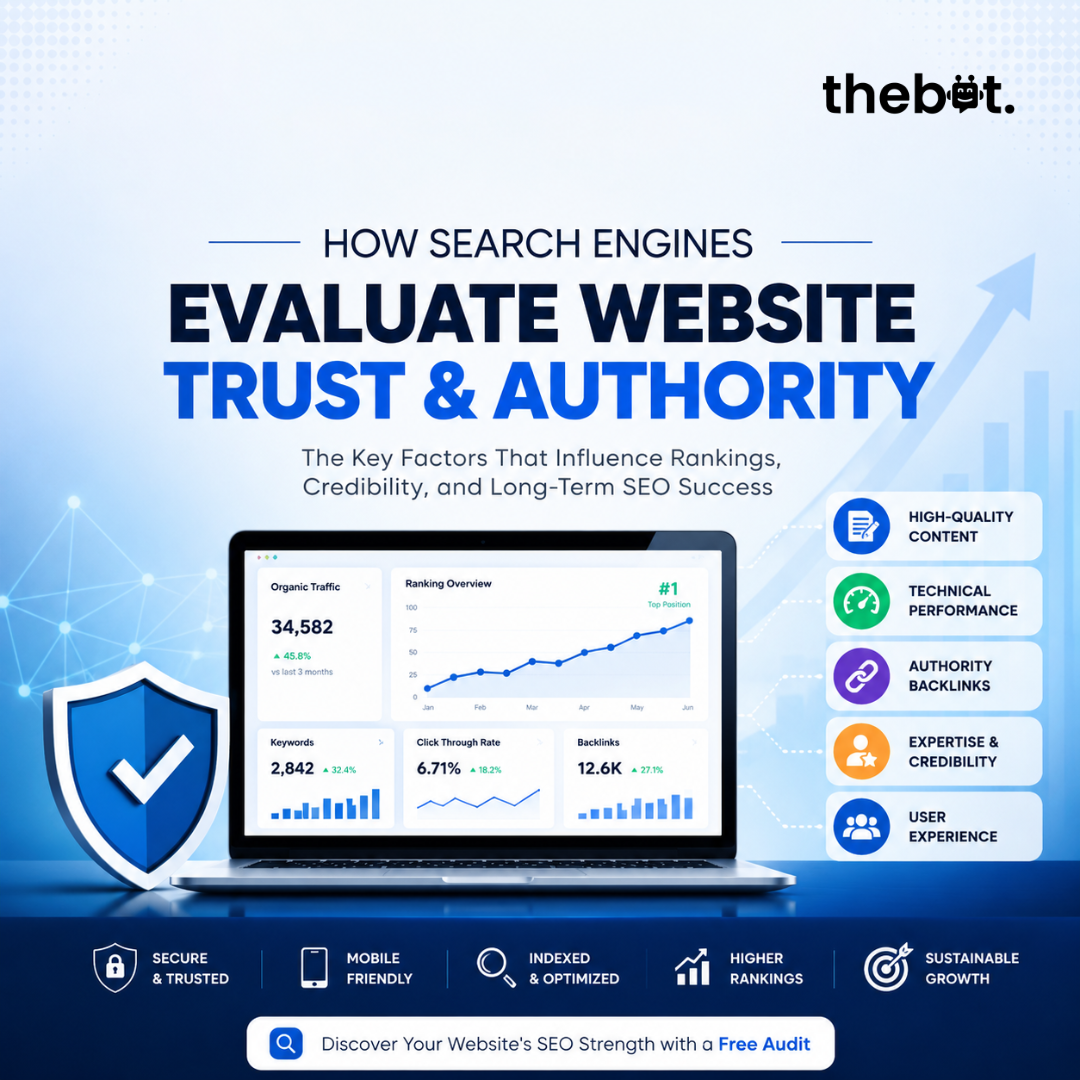
1. Creating High-Quality Content
Search engines reward websites that provide valuable, accurate, and relevant information. Publishing content that answers user questions and demonstrates expertise helps establish credibility over time.
2. Improving Technical SEO
Technical factors such as site speed, mobile responsiveness, secure browsing, and proper indexing contribute significantly to trust signals. A technically optimized website creates a better experience for both users and search engines.
3. Strengthening Backlink Authority
Backlinks from reputable and relevant websites act as endorsements. Search engines use these signals to determine the authority and reliability of a website within its industry.
4. Demonstrating Expertise and Credibility
Content supported by industry knowledge, real-world experience, and trustworthy information helps strengthen authority signals. Search engines increasingly favor websites that showcase genuine expertise.
5. Enhancing User Experience
User engagement metrics such as time on site, navigation ease, and overall satisfaction can indirectly influence how search engines perceive website quality. A positive user experience builds trust with both visitors and search engines.
To identify opportunities for improving your website’s trust and authority, you can start with a free website audit:
https://freeaudit.thebot.agency/
Case Study
Challenge
A service-based company was experiencing stagnant organic traffic despite publishing regular content. Their website faced challenges including limited authority, weak backlink signals, and technical SEO shortcomings.
Solution
A comprehensive optimization strategy was implemented, focusing on:
- Technical SEO improvements
- Content quality enhancement
- Authority-building initiatives
- Backlink profile strengthening
- User experience optimization
Results
Over the following months, the company achieved:
- Increased organic traffic
- Higher search engine rankings
- Improved visibility for competitive keywords
- Greater user engagement
- Stronger overall website authority
The results highlighted the importance of building trust and authority as a foundation for long-term SEO success.
Conclusion
Search engines continuously evaluate websites to determine which sources deserve visibility in search results. Trust and authority are among the most important factors influencing these decisions. Websites that consistently demonstrate expertise, provide valuable content, maintain strong technical performance, and earn credible endorsements are more likely to achieve sustainable rankings.
For businesses looking to understand how search engines currently view their website and identify opportunities for improvement, a free website audit is an excellent starting point:
https://freeaudit.thebot.agency/
By addressing trust and authority signals strategically, businesses can improve search visibility, attract more qualified traffic, and achieve long-term digital growth.
Frequently Asked Questions
Website trust refers to how reliable and credible a website appears to search engines. Factors such as secure browsing, quality content, accurate information, and positive user experience help establish trust.
Search engines evaluate authority through signals like high-quality backlinks, industry expertise, content relevance, user engagement, and overall website reputation.
Backlinks act as endorsements from other websites. When reputable websites link to your content, search engines view your website as more trustworthy and authoritative.
Yes. Technical SEO factors such as site speed, mobile responsiveness, HTTPS security, crawlability, and proper indexing contribute to a positive user experience and stronger trust signals.
Businesses can improve authority by creating valuable content, earning quality backlinks, optimizing technical SEO, demonstrating expertise, and consistently providing a positive user experience.