How to Reduce Bounce Rate Without Hurting SEO | Improve User Engagement
In this article:
Learn how to reduce bounce rate without hurting SEO using proven strategies like improving page speed, user experience, content quality, and website optimization. Discover practical tips to increase engagement and conversions.
Introduction
Bounce rate is one of the most discussed website performance metrics, but it's also one of the most misunderstood. While a high bounce rate can indicate that visitors are leaving your site without engaging, it doesn't always mean your website is failing. The real goal isn't simply to lower the bounce rate—it's to create a better user experience that keeps visitors engaged while maintaining strong SEO performance.
Many businesses try to reduce bounce rate using aggressive pop-ups, misleading navigation, or forced clicks. These tactics may improve analytics temporarily, but they often hurt user experience and, ultimately, search engine rankings. The key is to focus on genuine engagement that benefits both users and SEO.
Problem Statement
A high bounce rate often points to underlying issues that prevent visitors from interacting with your website. Common causes include:
- Slow page loading times
- Content that doesn't match user intent
- Poor website navigation
- Weak or unclear calls-to-action
- Poor mobile responsiveness
- Overwhelming layouts or difficult-to-read content
Many businesses attempt quick fixes that encourage unnecessary clicks instead of addressing the real problems. This approach rarely improves conversions and can negatively impact SEO if users become frustrated and leave.
How We Solve It
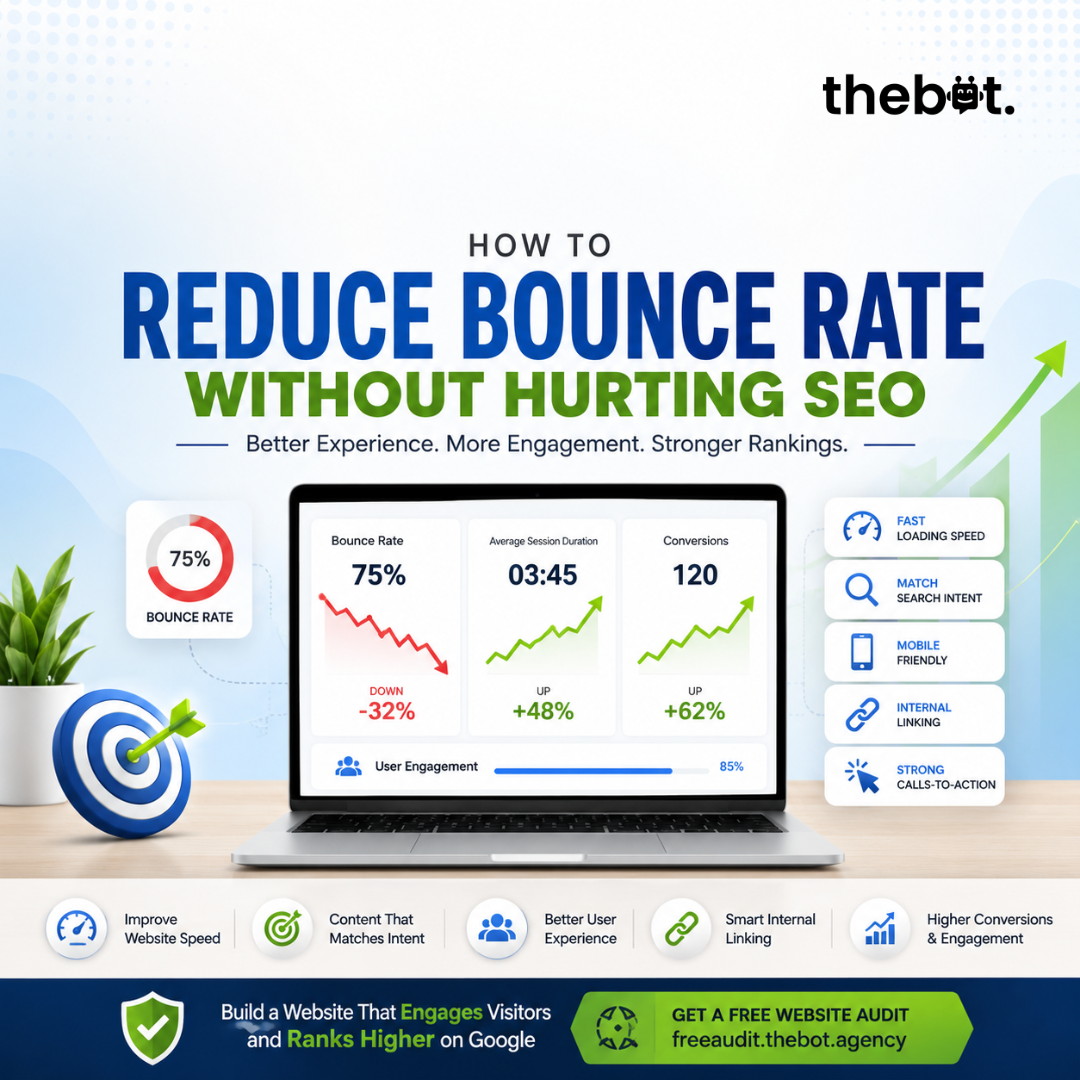
At The Bot Agency, we use proven strategies that naturally improve user engagement without compromising SEO.
Improve Website Speed
Fast-loading pages create a better user experience and reduce the chances of visitors leaving before your content even loads.
Create Content That Matches Search Intent
Visitors stay longer when they immediately find the answers they're looking for. Well-structured, informative content keeps users engaged and builds trust.
Enhance User Experience
Simple navigation, clean page layouts, mobile-friendly design, and easy-to-read formatting encourage visitors to explore your website naturally.
Strengthen Internal Content Flow
Relevant internal links help users discover additional valuable content instead of forcing them into unnecessary clicks.
Use Meaningful Calls-to-Action
Clear and relevant CTAs guide visitors toward the next step without disrupting their browsing experience.
Continuously Analyze and Optimize
Regular website audits help identify user behavior, technical issues, and opportunities to improve engagement and overall website performance.
Want to know what's affecting your website's bounce rate? Get a free website audit here:
https://freeaudit.thebot.agency/
Case Study
The Challenge
A service-based business was receiving consistent organic traffic but had a bounce rate of over 75%. Visitors were leaving quickly, resulting in fewer inquiries and lower conversions.
Our Approach
After conducting a comprehensive website audit, we identified several key issues:
- Slow-loading pages
- Unclear content structure
- Weak calls-to-action
- Mobile usability problems
- Content that didn't fully address visitor intent
We optimized page speed, improved navigation, reorganized content for better readability, strengthened internal linking, and created more effective conversion paths.
The Results
Within a few months, the business achieved:
- Lower bounce rate through genuine user engagement
- Increased average session duration
- Higher inquiry and conversion rates
- Improved organic search visibility
- Better overall user experience without sacrificing SEO performance
Conclusion
Reducing bounce rate isn't about making visitors click more pages—it's about giving them the right information, a seamless browsing experience, and a clear path to take action. When your website delivers value, users stay longer, engage naturally, and search engines recognize those positive signals.
If you'd like to discover what's preventing visitors from engaging with your website, start with a free website audit today:
Frequently Asked Questions
Bounce rate is the percentage of visitors who leave a website after viewing only one page without taking any further action. While a high bounce rate isn't always negative, it can indicate issues with user experience, content relevance, or website performance.
Bounce rate itself is not a direct Google ranking factor. However, if visitors quickly leave because of poor user experience or irrelevant content, it can indirectly impact your SEO performance by reducing user engagement.
You can reduce bounce rate by improving website speed, creating content that matches search intent, optimizing mobile responsiveness, simplifying navigation, and using clear calls-to-action that encourage visitors to explore further.
Common causes include slow-loading pages, poor website design, confusing navigation, low-quality or irrelevant content, weak calls-to-action, and websites that are not optimized for mobile devices.
A website audit identifies technical issues, content gaps, SEO problems, and user experience challenges that may cause visitors to leave. Fixing these issues helps improve engagement, conversions, and overall website performance.