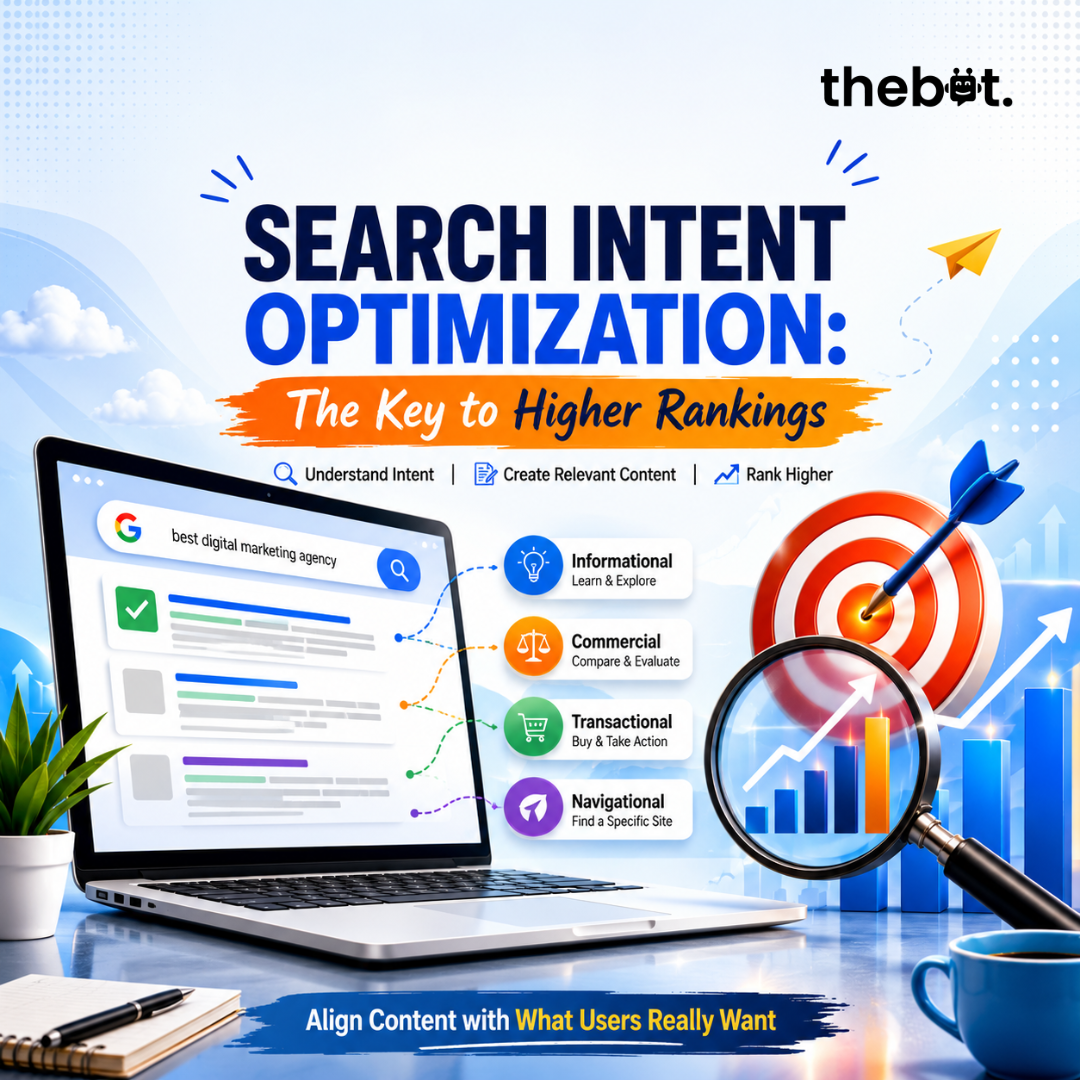
Search Intent Optimization: The Key to Higher Rankings & Better SEO Results
In this article:
Discover how Search Intent Optimization helps improve search rankings, attract qualified traffic, and increase conversions by aligning content with what users are actually searching for.
Introduction
In today's competitive digital landscape, ranking on search engines is no longer just about targeting keywords. Search engines have evolved to prioritize content that satisfies user needs and delivers relevant answers. This shift has made Search Intent Optimization one of the most critical components of a successful SEO strategy.
Search intent refers to the purpose behind a user's search query. Whether someone is looking for information, researching solutions, comparing options, or preparing to make a purchase, search engines aim to provide the most relevant results. Businesses that understand and optimize for search intent can achieve higher rankings, attract qualified traffic, and improve conversion rates.
Problem Statement
Many businesses invest significant resources into SEO but fail to see consistent ranking improvements or meaningful business outcomes. One of the primary reasons is a disconnect between the content they create and the intent of the users searching for it.
Common challenges include:
- Ranking for keywords but receiving low engagement.
- High bounce rates on important landing pages.
- Traffic that does not convert into leads or customers.
- Content that focuses on keywords rather than user needs.
For example, a business may create a sales-focused page for a keyword where users are actually looking for educational information. When visitors don't find what they expect, they leave quickly, signaling to search engines that the content may not be the best result for that query.
How We Solve It
Search Intent Optimization begins with understanding what users truly want when they search.
1. Intent Research
We analyze search queries, search engine results pages (SERPs), competitor content, and user behavior to determine the underlying intent behind target keywords.
2. Content Alignment
Once intent is identified, content is structured to match user expectations:
- Informational searches receive educational and insightful content.
- Commercial searches receive comparison and evaluation content.
- Transactional searches are directed to conversion-focused pages.
- Navigational searches are supported with clear pathways to relevant resources.
3. Content Optimization
We improve content structure, headings, readability, and relevance to ensure users find answers quickly and easily. This helps increase engagement and improve search performance.
4. Continuous Improvement
Search behavior changes over time. Regular monitoring and optimization ensure content remains aligned with evolving user expectations and search engine algorithms.
Businesses looking to identify intent gaps and SEO opportunities can start with a free website audit at:
https://freeaudit.thebot.agency/
Case Study
A growing B2B technology company struggled to generate quality leads through organic search despite investing heavily in content creation.
Challenges
- Poor rankings for high-value keywords.
- Low engagement on key landing pages.
- High bounce rates and low conversion rates.
Strategy Implemented
- Conducted a detailed search intent analysis.
- Identified content that did not align with user expectations.
- Reorganized content around informational, commercial, and transactional intent.
- Enhanced content structure and user experience.
Results
- Improved rankings for targeted keywords.
- Increased organic traffic from relevant audiences.
- Higher user engagement and longer session durations.
- Significant growth in qualified leads generated through organic search.
The results demonstrated that aligning content with user intent can have a direct impact on both search visibility and business outcomes.
Conclusion
Search Intent Optimization is no longer optional for businesses that want to compete effectively in search results. Understanding why users search—and creating content that fulfills those needs—helps improve rankings, increase engagement, and drive better conversions.
Instead of focusing solely on keywords, businesses should focus on delivering the right content for the right audience at the right stage of their journey. When content aligns with intent, both users and search engines respond positively.
Want to discover how well your website aligns with user search intent and uncover opportunities for higher rankings? Get your free website audit today:
Frequently Asked Questions
Search Intent Optimization is the process of creating and optimizing content based on the reason behind a user's search query. It helps ensure that content matches what users expect to find, improving rankings and engagement.
Search intent is important because search engines prioritize content that satisfies user needs. When content aligns with intent, it is more likely to rank higher, attract relevant visitors, and generate conversions.
The four primary types of search intent are: Informational (seeking knowledge) Commercial (researching options) Transactional (ready to take action or purchase) Navigational (looking for a specific website or page)
Businesses can analyze search engine results pages (SERPs), review competitor content, study user behavior, and evaluate keyword patterns to understand the intent behind specific searches.
By providing users with the information or solutions they are looking for, content becomes more relevant. This leads to better engagement signals, lower bounce rates, and stronger search engine rankings.