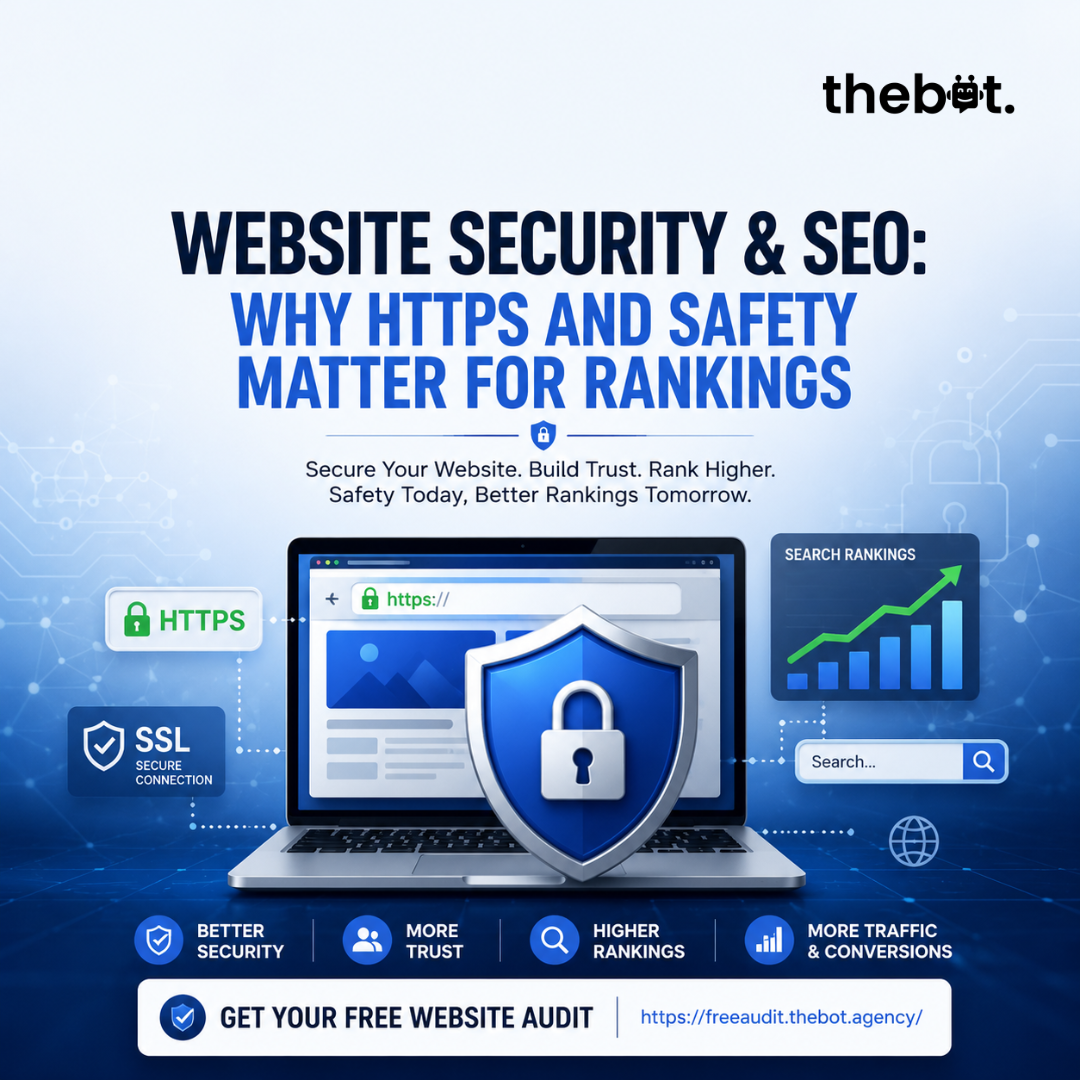
Website Security & SEO: Why HTTPS and Safety Matter for Rankings
In this article:
Learn how HTTPS, SSL certificates, and website security impact SEO rankings, user trust, and conversions. Discover why secure websites perform better in search results and how a free website audit can help identify security and SEO opportunities.
Introduction
In today’s digital world, website security plays a vital role in both user trust and search engine performance. While many businesses focus on content, keywords, and backlinks to improve rankings, they often overlook one critical factor: website security. Search engines prioritize secure websites because they provide a safer experience for users, making HTTPS and strong security practices essential components of modern SEO.
A secure website not only protects sensitive information but also helps build credibility with visitors, reduce bounce rates, and improve overall search visibility. As cyber threats continue to evolve, businesses that invest in website security gain a significant advantage over competitors that do not.
Problem Statement
Many businesses unknowingly put their SEO performance and customer trust at risk by neglecting website security. Common challenges include:
Lower Search Engine Rankings
Search engines favor secure websites. Sites without HTTPS may struggle to rank as effectively as secure competitors.
Browser Security Warnings
Visitors may see warnings when accessing unsecured websites, creating an immediate trust issue and increasing the likelihood of users leaving the site.
Increased Risk of Cyberattacks
Without proper security measures, websites become vulnerable to malware, hacking attempts, and data breaches that can negatively impact search performance and brand reputation.
Reduced Conversions
Customers are less likely to submit forms, make purchases, or share information on websites that appear unsafe or untrustworthy.
How We Solve It
A strong website security strategy helps businesses protect their users while supporting SEO growth. Key solutions include:
HTTPS Implementation
Installing and properly configuring SSL certificates ensures that data transferred between users and the website remains encrypted and secure.
Security Audits
Comprehensive website audits help identify vulnerabilities, outdated software, security gaps, and technical issues that may impact SEO performance.
Technical Optimization
Security improvements are combined with technical SEO best practices to create a website that is both safe and search-engine friendly.
Ongoing Monitoring
Regular monitoring and maintenance help prevent future threats while ensuring that website performance and security remain strong over time.
To identify security vulnerabilities and SEO opportunities, businesses can start with a free website audit:
https://freeaudit.thebot.agency/
Case Study
Challenge
A service-based company was experiencing declining organic traffic and lower lead generation despite ongoing SEO efforts. A technical review revealed that the website lacked HTTPS implementation and contained several security weaknesses that affected user trust and search performance.
Solution
A complete website audit was conducted, followed by:
- HTTPS migration with proper redirect management
- SSL certificate implementation
- Security hardening and vulnerability fixes
- Technical SEO improvements
- Continuous monitoring and maintenance
Results
Within a few months, the company achieved:
- Improved search engine rankings
- Increased organic traffic
- Higher user engagement
- Reduced bounce rates
- More qualified leads and conversions
The combination of stronger security and SEO optimization helped create a safer user experience while driving measurable business growth.
Conclusion
Website security is no longer optional for businesses that want to compete online. HTTPS, SSL certificates, regular security audits, and proactive maintenance all contribute to better user experiences and stronger search engine rankings. A secure website builds trust, protects customer data, and helps businesses maintain long-term SEO success.
If you're unsure whether your website is secure and optimized for search engines, a professional website audit is the best place to start. Discover potential vulnerabilities, improve website performance, and uncover opportunities to boost your rankings with a free audit:
Frequently Asked Questions
HTTPS helps secure data exchanged between users and websites. Search engines favor secure websites because they provide a safer browsing experience, which can positively influence search rankings.
Yes. Modern browsers display warnings for unsecured websites, which can discourage visitors from engaging with your content, filling out forms, or making purchases.
An SSL certificate encrypts data transmitted between a website and its visitors. It enables HTTPS and helps protect sensitive information from cyber threats.
Absolutely. Malware infections, security breaches, and hacked content can result in search engine penalties, reduced rankings, and loss of customer trust.
It is recommended to perform security audits regularly, especially after major website updates, migrations, or changes to plugins and software, to identify vulnerabilities before they become serious issues.